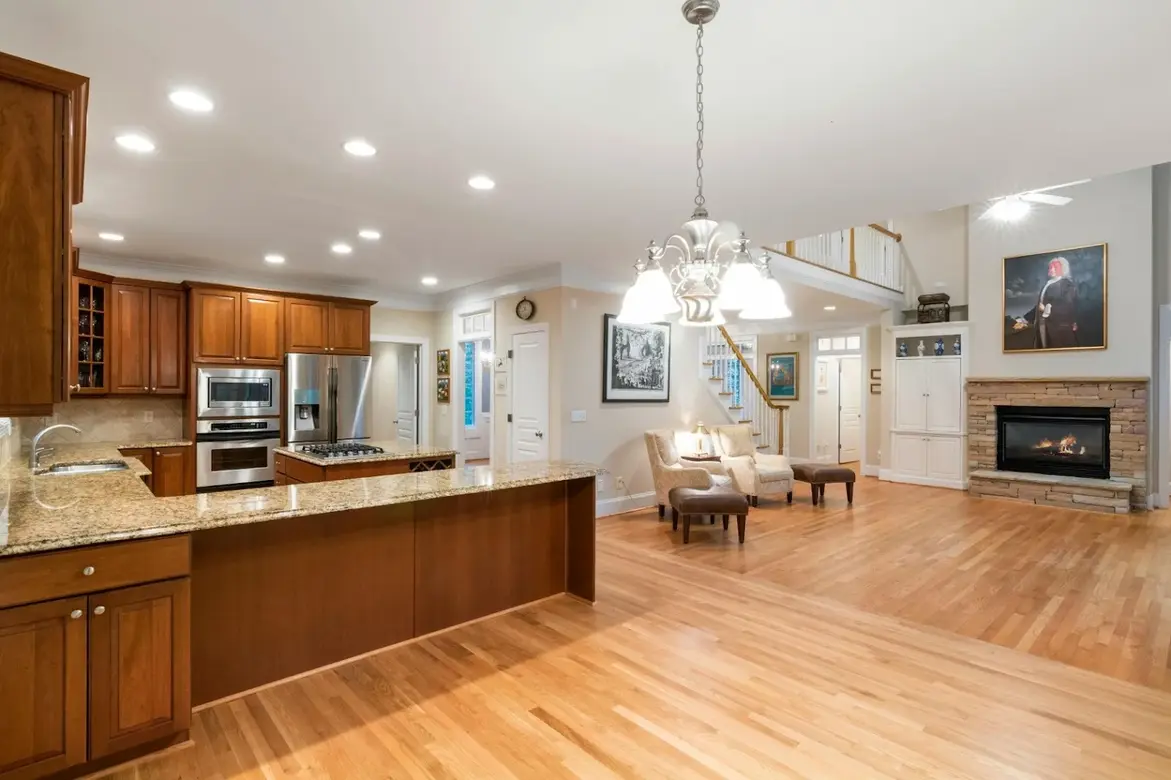

Transitions between wood floors serve both a visual and functional purpose.
From a design standpoint, they help guide the eye as you move from one space to another. From a performance standpoint, they protect the edges of the flooring and allow each flooring material to expand and contract naturally.
Wood flooring moves with changes in temperature and humidity, and without a proper transition, that movement can cause boards to push against each other, leading to buckling, gaps, or cracking.
This means that understanding how to transition between two different wood floors is about a lot more than just achieving your stylistic vision. It’s also about preserving the integrity of your floors so that they last for decades to come.
Not every hardwood floor connection requires a transition, but there are still plenty of situations that do, and knowing the difference can go a long way to helping you avoid any issues down the road.
Different species, stains, and grain patterns often clash when they come together, but with a proper transition, it doesn’t have to be that way.
Though it can be challenging, transitioning between flooring the right way allows you to create a clean visual break that clearly communicates the change without appearing messy, mismatched, or accidental.
Woods with different plank widths and thicknesses are an even bigger challenge, making the need for a proper transition even more essential.
Even tiny differences in height can become serious tripping hazards or cause the edge of the flooring to wear down faster over time. However, using the right transition pieces of techniques can help bridge the difference naturally and protect both types of flooring in the process.
Though not always necessary, when hardwood flooring runs in different directions, it’s definitely a good idea to include a transition to help reset the visual flow. This is especially true when it comes to open doorways and hallways where changes in direction can feel particularly abrupt and off-putting.
This is where planning and product selection really matter.
There are several proven ways to create clean, durable, and attractive transitions, but it all depends on your specific layout and flooring materials.
T-molding is one of the most popular flooring transition solutions, and for good reason. This type of molding sits at the center of the expansion gap, creating a symmetrical, balanced look that still allows both sides to expand and contract as necessary.
However, T-molding isn’t a one-size-fits-all solution for every hardwood flooring transition. It tends to work best in doorways, cased opening, and open floor plans, but only in cases where both types of wood flooring are the same height.
Reducer strips are designed to gradually slope from a higher floor to a lower one. This makes them ideal when transitioning between wood floors with different thicknesses. Reducers help prevent toe stubbing and tripping, and provide protection for the edge of the higher floor.
Flush transitions sit level with both floors and create a smooth, continuous surface. They work best when both floors are the same thickness and installation happens at the same time. However, flush transitions require much more precise and careful installation and planning, making them an extremely situational transition solution.
A good transition should feel natural, and not sudden or distracting. Your design choices will play a big role here, so it’s important to consider that every choice you make will affect how well your transitions will turn out.
There really is no right answer here. Though matching transition pieces can effortlessly blend in with the surrounding flooring, more complementary pieces can add a subtle contrast that really makes a room pop. It’s all about what type of look you want to achieve, which is why discussing the vision you have for your project with a professional beforehand is essential.
As silly as it may sound, considering the flooring hierarchy that exists in your home can help you make the right decision about how to transition between two different wood floors.
In most homes, the hardwood flooring in main living spaces like living rooms often acts as the primary anchor for the look of your home. This means that secondary spaces like bedrooms need to transition away from this anchor floor, and considering this hierarchy can help that transition feel more natural and purposeful.
Doorways, entryways, hallways, and cased openings naturally signal a change in space, making these locations ideal for transitions as they already align with how you already perceive the layout of your home. Using these breaks wisely is key to figuring out how to transition flooring without disrupting flow.
Even well-intentioned flooring projects can run into problems if transitions are overlooked or rushed.
Here are some questions that you should ask yourself to avoid many of the most common mistakes.
Wood floors need room to expand and contract naturally as temperature and humidity levels fluctuate throughout the year. Skipping expansion gaps or covering them improperly will almost certainly lead to buckling or cracking, which is why these gaps should never be an afterthought when planning transitions.
The answer to this question is an overwhelming yes. Though you should never go ahead with a project that doesn’t achieve the look you’re going for, completely ignoring function can and will lead to flooring that fails the test of time. The right solution is always the one that best balances appearance with long-term performance.
You should always plan transitions between flooring materials long before installation begins, as this helps ensure proper spacing, alignment, and material selection. Waiting to do this until later only limits your options and increases the risk of running into serious problems later on.
In some cases, yes.
Stripless transitions are possible when both floors are the same thickness and installation takes place at the same time. When possible, this approach creates a seamless appearance that naturally flows from room to room, but there are downsides.
Stripless, flush transitions are much more difficult and have little margin for error, so unless you have extensive experience in the industry, these types of transitions should almost certainly be left to the professionals.
At My Dad’s Flooring America, we guide you through every step of the flooring installation process, and that includes planning natural, tasteful transitions.
We’ll start by taking the time to get to know your vision and the goals that you want to achieve with your project. Then, we’ll evaluate your existing floors, room layout, and product choices, and provide you with all the best transition options that we think will support both the look you want and the performance your home needs.
We offer plenty of solid hardwood, engineered wood, vinyl, and laminate flooring options, all in an almost endless range of finishes, making it easy for you to find the perfect flooring to match your vision. But, regardless of which one you choose, you can trust that we’ll help you make the transitions between them as seamless and beautiful as possible.

Are you thinking about installing new flooring in your home? Still wondering how to best transition between two different wood floors? Give us a call at (610) 385-3833, or contact us on our website.
Our friendly team of local flooring experts is always here to answer your questions and will happily tell you more about how we can bring your new dream floors to life. We’ll even offer you a free in-home consultation and samples so that you can get all of the information you need before you have to make any final decisions.
Don’t push off your next flooring installation project any longer. Contact My Dad’s Flooring America today.
