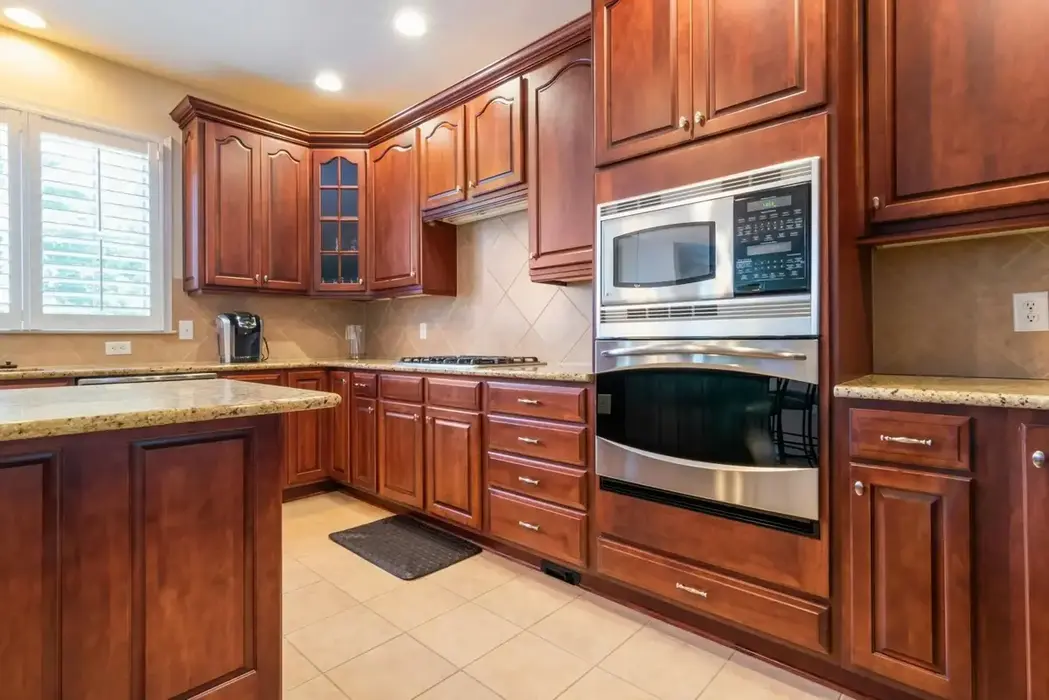

Your kitchen floor does so much more than simply add to the visual appeal of the room. It’s also an essential feature that has a huge effect on how well your kitchen performs and holds up over time. With constant foot traffic, dropped items, messy spills, and frequent cleaning, there are plenty of common flooring options that simply aren’t up to the task.
Kitchens often concentrate potentially damaging conditions like moisture, heat, and heavy wear all into one place, and that dangerous combination makes the flooring you choose here more important and consequential than almost any other room in your home.
Your kitchen flooring needs to be able to stand up to harsh everyday realities that come with being the heart of the home. Occasional spills are inevitable, whether it’s water, oil, or something sticky, and this, along with constant cleaning and heavy foot traffic, makes extreme durability and water resistance a necessity. But that’s not nearly all.
The best flooring for kitchens also has to be able to cope with the impact of temperature changes from cooking, plus the occasional dropped pan or utensil. This means that choosing a flooring material for your kitchen is about a lot more than just looks. It means that if you want to get the most out of your investment, you’ll need to make performance and longevity your top priorities.
If you’ve been wondering how to choose the best kitchen flooring for you, you’re not alone. With so many different options out there, narrowing down your options can feel incredibly overwhelming.
Our goal is always to make this decision as simple as possible by focusing on the features that matter most to your daily routine. So, if you’re struggling to figure out which options you should consider, here are some of the most important factors to consider.
Every kitchen flooring decision should always start with thinking about your everyday lifestyle. For example, durability and scratch resistance are always key when it comes to kitchen flooring, but If you have children or pets running around your home, they’re even more so.
The time you spend cooking and entertaining guests in your kitchen can also have a big effect on which flooring option might be best for you. The less time you spend in your kitchen, the less important comfort underfoot may be, but if you plan on making your kitchen one of your main living spaces, you might want to make comfort one of your highest priorities.
Budget is another crucial factor you’ll need to consider. After all, material and installation costs can vary widely, so if money is tight, this could be a top priority too.
At the end of the day, there is no single number one priority for everyone. You just need to weigh your options and figure out the features that are most important to you.
Water resistance is one of the biggest factors in kitchen flooring. Though some materials are fully waterproof, others need a lot more care to prevent damage. If you think your kitchen is likely to see frequent spills or heavy use, choosing a water-resistant or waterproof option is essential in helping you avoid long-term issues.
Comfort is something that many homeowners often overlook until they end up spending the whole day cooking a holiday meal, and ease of maintenance is an important variable to consider as well.
Your favorite flooring might look great, but if it's uncomfortable to walk on and requires consistent specialized cleanings, it may be worth choosing something else.
Tile has been a go-to choice for decades, and for good reason. Many homeowners still consider it the best tile flooring for kitchens because of its durability and resistance to moisture. Still, every homeowner and kitchen is different, so how do you know if it's the right choice for you?
Tile is one of the best flooring options for kitchens because it is highly resistant to water, stains, and scratches. It handles spills with ease and is one of the easiest materials to clean, making it a practical choice for anyone with a busy household.
Tile also doesn’t lack when it comes to offering impressive design flexibility. Whether you prefer a clean, modern look or something more traditional, tile is a choice that makes it easy to match your design vision.
Tile is a harder surface, which can feel less comfortable if you spend a lot of time standing and it can also quite feel cold during colder winter months. Grout lines also require some maintenance to keep them looking fresh and clean. However, as long as you’re willing to keep up with proper care, tile is easily one of the most durable kitchen flooring options on the market.
Ceramic and porcelain tile tend to be the most popular choices, with porcelain in particular offering higher density that makes it even more water-resistant.
Natural stone tile can also be a great option, offering a more unique look and feel, though it typically requires more maintenance to protect its surface than the aforementioned options.
Luxury vinyl has become one of the most popular choices for modern kitchens because it offers a balance of durability, comfort, style, and cost efficiency that makes it an ideal choice for many. But is it the right choice for you?
Luxury vinyl is often waterproof, allowing it to handle spills, moisture, and humidity without the same concerns as more natural materials. It also feels a lot softer underfoot than tile, which can make daily use more comfortable. Plus, with so many different styles to choose from, luxury vinyl makes it about as easy as can be to bring your specific stylistic vision to life.
Luxury vinyl flooring works best in busy homes where durability is of the utmost importance. It’s also a strong option if you’re looking for a lower-maintenance and lower-cost solution that still looks high-end.
This means that if you need something that offers an equal balance between cost and performance, luxury vinyl could be the perfect choice for you.
Many homeowners ask about whether hardwood flooring is a smart choice for kitchens, and the answer largely depends on your unique expectations and lifestyle. Hardwood brings warmth and character that’s hard to replicate, but it can also come with plenty of drawbacks.
Hardwood flooring for kitchens offers a timeless, classic elegance that adds value to your home and creates a warm, inviting atmosphere that many people highly prefer to most other flooring options. You can also refinish hardwood flooring, which helps maintain its appearance and can potentially extend its lifespan for decades to come.
Moisture is the biggest concern when it comes to hardwood. Natural wood simply isn’t very good at resisting moisture, which means that you’ll need to be careful to clean up spills quickly to prevent damage. Scratches and dents are also a significant concern, especially in high-traffic kitchens.
All of these issues by no means completely rule hardwood out of the question, but they are crucial variables to consider before you commit to hardwood.
If you’re truly set on hardwood, there are some things that you can do to make it a more kitchen-friendly option. Using protective finishes can go a long way to reducing moisture concerns, and placing rugs in key areas, such as near sinks, can add another layer of protection.
With the right care, hardwood can still be a practical and attractive option for kitchens. But it does come along with certain aspects that make us hesitant to claim that it's one of the best kitchen flooring options.
Laminate and engineered hardwood offer decent alternatives that combine style with additional durability. Depending on the goals that you want to achieve with your project, these options can give you plenty of flexibility when balancing performance and cost.
Laminate is designed to resist scratches and everyday wear and tear, making it a good fit for any busy household. It also comes in a wide range of styles that mimic natural materials, giving you a ton of flexibility when it comes to design.
Laminate is generally one of the most budget-friendly flooring materials as well, which makes it an incredibly appealing choice if you're planning a larger kitchen project or are on a strict budget.
Engineered hardwood features a real hardwood surface with a much more stable core than true hardwood. This construction helps it handle changes in moisture better than solid hardwood, but still provides that same classic look.
Installation plays just as important of a role as material choice in how well your kitchen flooring will perform over time. Even the highest quality materials can underperform without proper installation, so you really can’t risk getting this step wrong.
Though it is completely within the realm of possibility to install your flooring yourself, the impact of professional installation cannot be understated. Even the most competent DIYers are likely to make mistakes that can compromise their investment. So, if you want to ensure the long-term durability and appearance of your kitchen flooring, going with a professional is always the best choice.
Every kitchen flooring installation project starts with proper preparation that includes everything from removing old flooring to preparing the subfloor underneath. From there, installation timelines vary drastically depending on the size of your kitchen and the material that you choose.

Are you thinking about renovating your kitchen? Do you need help narrowing down all of the best kitchen flooring options? Give us a call at (610) 385-3833.
Our team of kitchen flooring experts is always here to answer your questions and will happily spend the time getting to know you and walking you through all of the best kitchen flooring products. We even offer free samples so that you can get your hands on all your favorites before you have to make any final decisions.
Nothing transforms a kitchen quite like new flooring, so don’t push off your next renovation any longer. Contact My Dad’s Flooring America and start your kitchen transformation today.
