
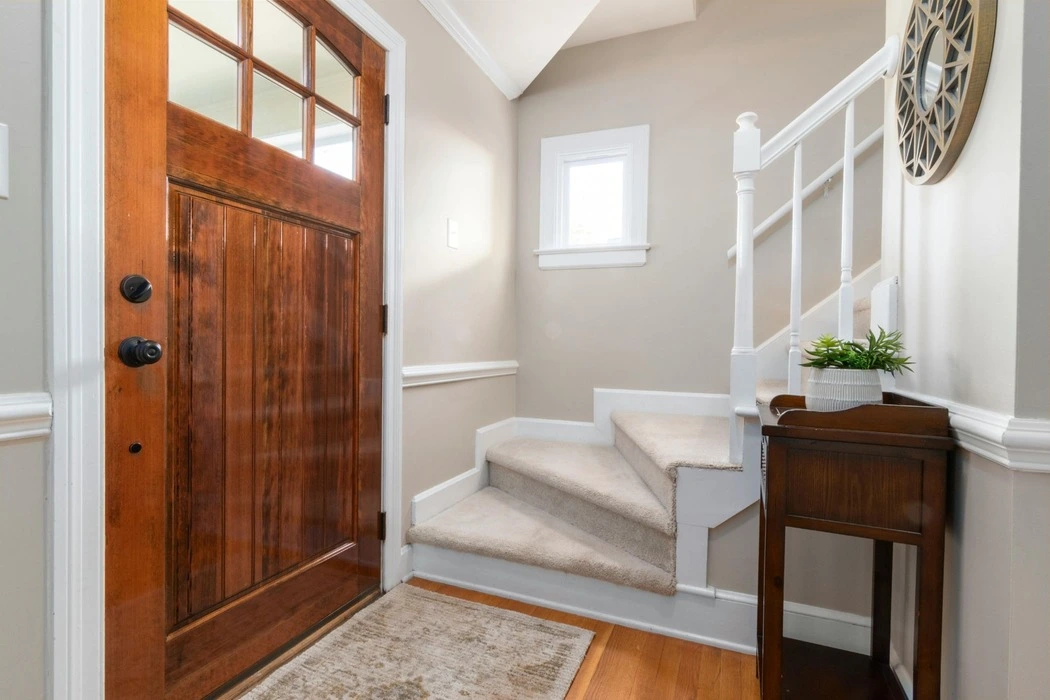

Transitions help guide the eye from one room to the next. This means that any good hardwood floor to carpet transition should create a natural flow that makes your home look and feel more connected. This is especially important in homes with open layouts where multiple flooring types are visible at once.
Though safety may not be the first thing that pops into your mind when planning your flooring transitions, uneven flooring edges created by poorly planned transitions can add potential tripping hazards to your home.
These tripping hazards can even be harmful for your flooring’s longevity and your investment, as constant tripping can add a ton of wear on top of your everyday regular use.
Flush transitions are ideal when carpet and hardwood are at the same height. This approach creates a smooth, level surface that works well in both modern and minimalist spaces.
This strategy also makes the carpet to hardwood floor transition subtle and understated, allowing the materials themselves to stand out without adding any extra visual elements.
Transition strips are easily one of the most common solutions. They come in wood, metal, and vinyl varieties and provide a clear separation between your carpet and hardwood, adding structure to the design and effective protection for each edge.
T-molding is another great option for floors with similar heights. These pieces effortlessly bridge the gap between rooms and create a smooth, consistent transition line that works perfectly for open floor plans and connected living areas.
If your hardwood sits higher than your carpet, reducer strips can create a gradual slope between the two surfaces that effectively hides any abrupt edges that are likely to become tripping hazards down the road.
For a more detailed and unique look, using a custom wood border or inlays can frame the transition area and add a decorative element that can make your home truly stand out above the rest.
The first thing you should look at is the height of each flooring material. Height differences are one of the key problems that proper transitions aim to eliminate, and those differences almost entirely determine whether a flush transition, reducer, or molding will be the best fit.
After physical height differences, it's all about making your carpet to hardwood floor transition to complement the rest of your home’s design. A sleek metal strip may work well in a modern space, but a stained wood transition will undoubtedly suit a more traditional room much better.
Higher-traffic areas require more durable solutions that are up to the challenge of dealing with that increased daily wear. Hallways and entry points tend to be the most foot traffic-heavy areas of a home, but even other spaces like kitchens and living rooms can benefit from prioritizing stronger materials and more secure installation.
Doorways are the most common place for a hardwood floor transition to carpet, as they create a natural break between rooms all by themselves. However, that door or entryway can’t do all the heavy lifting, so it's still important to properly plan these flooring transitions, even for a door that usually stays closed.
In open layouts, transitions can subtly separate spaces without the need for walls or extra doorways. Open floor plans are all about creating balance, and by choosing the right transition, your home can still feel free and open while still allowing you to give each space its own defined identity.
Stairs and hallways are some of the most difficult transition points to get right, but they are also some of the most important. Figuring out how to properly transition through these spaces isn’t just about visual flow and appeal. It’s also essential to improve safety and prevent wear in places that see constant heavy use.
Are you planning your next flooring upgrade? Are you still trying to figure out how to properly transition from a hardwood floor to carpet before you get started? Give us a call at (610) 385-3833.
Our friendly team of local flooring experts is always here to answer questions and will gladly help you decide how to make your hardwood floor to carpet transition improve the look and feel of your home. We even offer free estimates, samples, and a useful room visualizer so that you can plan everything out well before you set anything in stone.
Don’t push off your next flooring project any longer. Contact My Dad’s Flooring America and transform your home’s flooring today.